What’s the Difference Between Schedule 40 and Schedule 80 PVC?
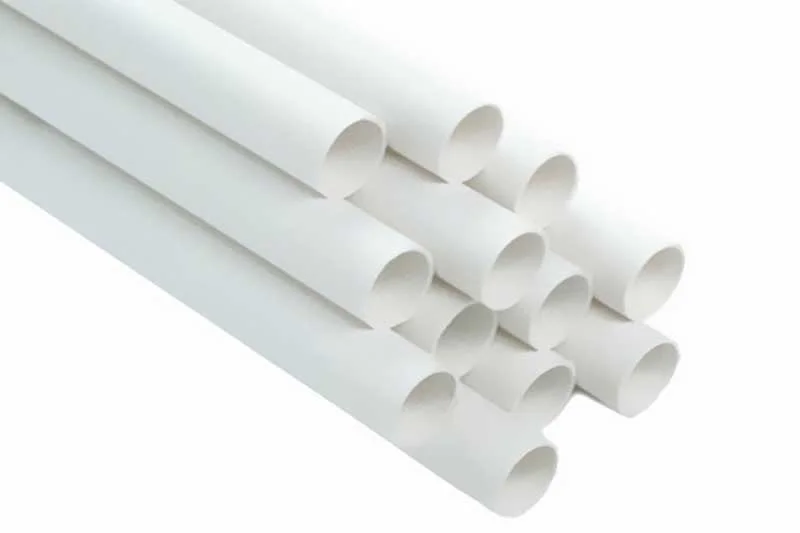
When it comes to PVC pipes, two common options are Schedule 40 and Schedule 80. These pipes have distinct differences in terms of wall thickness, price, weight, inner and outer diameters, installation requirements, and color. In this post, we will explore these differences to help you make an informed decision when selecting the appropriate PVC pipe for your needs.
Wall Thickness
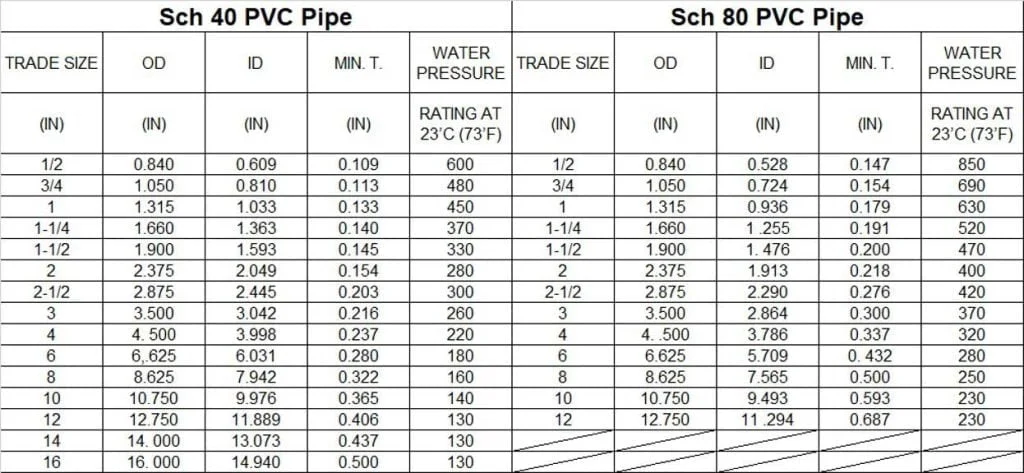
The primary difference between Schedule 40 and Schedule 80 PVC pipe lies in their wall thickness. Schedule 40 PVC pipe has a thinner wall compared to Schedule 80, making it more lightweight and easier to handle during installation. On the other hand, Schedule 80 PVC pipe boasts a thicker wall, providing increased mechanical strength and durability. This added thickness enhances its ability to withstand external pressures, impacts, and other potentially damaging forces.
Price
Due to the increased wall thickness and material requirements, Schedule 80 PVC pipe is generally more expensive than Schedule 40. The thicker wall of Schedule 80 conduit requires more raw materials for production, resulting in higher costs for manufacturers. This, in turn, translates to higher prices for PVC pipe wholesalers and consumers.
Weight
Due to the thicker wall per unit volume, Schedule 80 PVC pipe is heavier than Schedule 40 PVC pipe of the same size and length. While this might not be a significant concern for ordinary consumers, it can impact distributors or manufacturers who need to pay higher shipping costs to transport the products from factories or warehouses to consumers.
Inner Diameter and Outer Diameter
Both Schedule 40 and Schedule 80 PVC pipe have the same outer diameter (OD) dimensions, allowing them to use the same fittings for connections. However, due to the difference in wall thickness, the inner diameter (ID) also varies. In summary, because of the increased wall thickness, the ID of Schedule 80 PVC pipe is smaller than that of Schedule 40 PVC pipe.
Installation
Due to its heavier weight, Schedule 80 PVC pipe may require different equipment and personnel for large-scale construction projects compared to Schedule 40 PVC pipe. Additionally, both Schedule 40 and Schedule 80 PVC pipe, having the same outer diameter, can use the same fittings for installation, as per ASTM and NEC guidelines. It is important to use specialized PVC glue to secure the connections of all PVC fittings and pipes during installation.
Color
To differentiate between Schedule 40 and Schedule 80 PVC pipe, they are typically manufactured in different colors. Schedule 40 PVC pipe is commonly white, while Schedule 80 PVC pipe is usually dark gray. This color distinction helps with visual identification and facilitates installation and construction.
Advantages and Disadvantages
When comparing Schedule 40 PVC pipe to Schedule 80 PVC pipe, it's essential to consider their respective advantages and disadvantages:
Schedule 40 PVC:
• Wide applicability, suitable for most building and engineering projects
• Thinner wall thickness compared to Schedule 80 PVC
• Lighter weight, lower price, and lower transportation costs
• Thinner wall thickness results in a larger inner diameter
• Can withstand water pressure of up to 600 PSI
• More size options available
• Generally white in color, but not always
Schedule 80 PVC:
• Wide applicability, suitable for projects with higher requirements
• Thicker wall thickness compared to Schedule 40 PVC
• Heavier weight, resulting in higher prices and transportation costs
• Thicker wall thickness results in a smaller inner diameter
• Can withstand water pressure of up to 850 PSI
• Fewer size options available
• Generally dark gray in color, but not always
In conclusion, when choosing between Schedule 40 and Schedule 80 PVC pipe, it's crucial to consider factors such as wall thickness, price, weight, inner and outer diameters, installation requirements, and color. For general DWV (drainage, water, and vent) purposes, using Schedule 40 PVC pipe is more cost-effective. However, if your project has higher requirements, using Schedule 80 PVC pipe would be better.
If you still have questions about this, you can also contact your PVC conduit manufacturers for further information.

.jpg)
.jpg)
Comments
Post a Comment